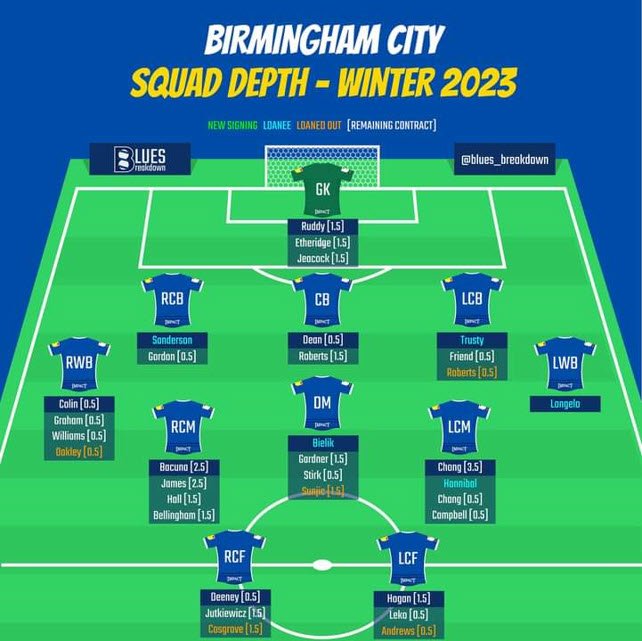
In the high-stakes world of professional football, success isn't just about the eleven players who start on the pitch; it's a intricate dance between Transfer Market Impact & Squad Depth. A team's ability to navigate grueling schedules, inevitable injuries, and tactical shifts often hinges on the quality and strategic deployment of its entire roster. From the star player bagging headlines to the unsung hero coming off the bench, every individual contributes to the grand tapestry of a championship season.
Championships aren't won with just a starting XI; they're forged over 38-game seasons, domestic cups, and European campaigns. The difference between lifting silverware and fighting relegation frequently comes down to how smartly a club builds its roster beyond the obvious names, and how effectively it manages the ebb and flow of its talent pool.
At a Glance: Building a Resilient Football Squad
- Beyond the Stars: Successful teams categorize their squads into Star Players, Starters, Bench Players, and Young Prospects, each with specific roles and expectations.
- The Bench's Silent Power: Players ranked 13th-17th in minutes played contribute significantly, averaging around 1100 minutes per season each. Their impact, both positive and negative, is substantial.
- Impactful Bench Players: Often forwards, attacking midfielders, or full-backs who can exploit late-game transitions. Experienced, creative midfielders also offer significant value.
- Age is (Mostly) Just a Number: While bench players are typically younger, valuable contributions still come from experienced veterans, and younger players can be integrated more frequently without a major drop in performance.
- Squad Churn: Too much change (high churn) can destabilize a team, especially for established clubs. Too little can lead to stagnation. Champions tend to evolve steadily, making fewer, more deliberate changes.
- Strategic Investment: Don't neglect depth in critical positions like reserve goalkeepers. Early integration of young attackers and retention of experienced playmakers can be game-changers.
- The 5-Sub Rule: The increased number of substitutions per game amplifies the strategic importance of a deep, versatile bench.
The Blueprint for a Balanced Squad: More Than Just the Starting XI
Building a truly competitive football team requires a nuanced understanding of roles, beyond merely accumulating individual talent. An EFL Head Coach, for instance, meticulously structures his squad into four distinct sub-groups, each vital to the team's overall cohesion and performance:
- Star Players (5): These are your "difference makers"—the elite talents expected to deliver maximum output and define key moments. They command the highest wages and have no age restrictions, being valued purely for their exceptional ability. Think of them as the irreplaceable core around whom the team's identity is built.
- Starters (7): The backbone of the team, these are the proven players in their domestic league, typically aged 24-28, who are expected to start nearly every match. They provide consistency, experience, and tactical discipline, forming the reliable engine of the squad.
- Bench Players (5): This group is often underestimated but critically important. Recruited for their exemplary attitude, strong character, and minimal injury history, these players possess a specific mindset. They must maintain the highest standards of behavior and be consistently "good trainers," physically and mentally ready to impact matches at a moment's notice. They typically earn lower wages and have no age restriction, but their contribution is disproportionate to their starting minutes.
- Young Players (5): These are the future. Assessed for their potential to develop into "Starter" or even "Star Player" categories within a few years, they also represent potential future transfer fees. Their development is a long-term investment, balancing immediate squad needs with future financial and sporting gains.
This structured approach highlights that a team isn't just a collection of individuals, but a carefully assembled ecosystem where each role, no matter how prominent or understated, is strategically filled.
Unpacking the "Bench Player" Advantage: Impact Beyond Minutes
While the spotlight often shines on the starting eleven, the truth is that the players ranked 13th to 17th in terms of minutes played are far from bystanders. Analytics FC, using their Goal Difference Added (GDA) model, revealed that these "bench players" clock around 1100 minutes each over a season (based on a 3420 total minutes baseline). That's a significant chunk of game time, offering ample opportunity for positive—or negative—impact.
Consider the increasing use of five substitutions per game. This rule change has profoundly amplified the strategic importance of a deep and versatile bench. Managers now have more tools to influence games late on, introduce fresh legs, change tactics, or simply rest key players without a significant drop-off in quality.
Who Makes a Difference from the Bench?
The data provides compelling insights into which types of players frequently offer the most value from the sidelines.
- Attack-Minded Contributions: Forwards, attacking midfielders, and attacking full-backs frequently dominate the top GDA contributors from the bench. This makes intuitive sense: fresh legs in advanced positions can exploit tired defenses, create chances, or score crucial goals.
- Specific Archetypes Shine: Fast players who can exploit late-game transitions are invaluable. Think of explosive wingers like Saint-Maximin or Jacob Murphy, who can turn a defensive situation into an attacking threat in seconds. Equally valuable are smart, experienced deep-lying passers, such as Tom Cairney or Adam Lallana, who can dictate tempo, retain possession, and unlock defenses with incisive passes when the game opens up.
Liverpool's Attacking Arsenal: A Case Study in Depth
Liverpool's 2022/23 season offered a clear example of how world-class attacking depth can be a significant advantage. With options like Salah, Nunez, Gakpo, Jota, Diaz, Firmino, and Elliott, their forward line could rotate without losing an edge. Their forwards delivered the highest cumulative and average GDA per 90 from the bench across the analyzed teams, underscoring the power of having multiple high-impact options ready to come on.
The Brighton Model: Blending Youth and Experience
Brighton & Hove Albion's impressive top-six finish demonstrated a masterful approach to squad management. They achieved the second-highest cumulative GDA per 90 from their bench players, remarkably, despite having the lowest average bench age (23) among the clubs studied.
Their strategy was a shrewd balance of seasoned professionals and exciting young talent. Players like Adam Lallana (34) provided invaluable experience and leadership, while youth phenoms like Evan Ferguson, Julio Enciso, and Levi Colwill offered raw talent and immediate impact. This blend of wisdom and youthful exuberance proved potent, showing that "experience" offers unquantifiable value beyond statistics, such as mentoring and leadership within the squad.
The Cost of Neglecting Depth: Lessons from Relegation
Conversely, neglecting squad depth can have severe consequences, as seen with relegated sides like Leicester City, Leeds United, and Southampton.
- Southampton's Inconsistency: Their inconsistent bench player usage often reflected poor planning under multiple managers, leading to a disjointed approach that lacked tactical coherence and depth when it was most needed.
- Leicester's Goalkeeper Woes: Leicester City's relegation was exacerbated by significant issues in goal. Both their starter and substitute goalkeeper (Daniel Iversen) had negative post-shot expected goals numbers, indicating they were conceding more than expected from shots faced. This highlights a crucial lesson: investing in depth across all positions, including a highly-rated reserve goalkeeper, is paramount. You can't afford a weak link, especially in such a critical role. Leicester also suffered from sheer statistical bad luck, finishing 13th in expected goal difference but 18th in reality, showing how fine the margins can be.
Manchester City's Exemplary Balance
Perhaps unsurprisingly, Manchester City most closely resembled the ideal squad structure. Their roster consistently balances youth and experience with an abundance of high-quality players (e.g., John Stones, Phil Foden, Julián Álvarez, João Cancelo, Aymeric Laporte) capable of stepping up when needed. This deep well of talent, combined with strategic rotation, allows them to compete on multiple fronts without burnout or a significant drop in performance. Their squad planning stands as a benchmark for sustained success.
Age-Old Question: How Old is Too Old for the Bench?
While there's no strict age restriction for bench players, their distribution typically falls between 21 and 30, slightly younger than the overall Premier League average (25 vs. 26.6). Data suggests a weak, messy downward trend in output with age, but this isn't a hard rule. Good value can still be found in older, experienced players, particularly for their leadership and specific skill sets.
Interestingly, the data implies it might be beneficial to give more playing time to younger bench players. Their passing skills, for instance, degrade slowest with age, suggesting that their lack of experience doesn't necessarily translate into a significant GDA drop-off. This encourages integrating youth earlier, fostering development, and potentially uncovering future starters.
Squad Churn: The Delicate Balance of Evolution vs. Revolution
Beyond individual player impact, the overall stability and evolution of a squad year-on-year—what's known as "squad churn"—plays a critical role in determining success. Squad churn measures how the share of playing minutes shifts season-to-season due to transfers, injuries, players being dropped, or tactical reshuffles. A churn percentage of zero means the exact same minute proportions, while 100 percent indicates a completely rebuilt side. Notably, new signings typically play only about 40% of available minutes in their first season, underscoring the time it takes for new talent to fully integrate.
The Champion's Secret: Stability and Incremental Growth
A clear pattern emerges when analyzing squad churn across the Premier League: reigning champions generally make the fewest changes, averaging a churn rate of just 27.5%. The churn rates increase significantly further down the table, with promoted clubs naturally experiencing the most drastic squad shifts as they attempt to bridge the quality gap.
History backs this up. Half of the ten most settled squads in Premier League history went on to win the title in the very same season. Manchester United, with a remarkable 13 titles, boasts the lowest average historical churn among current Premier League teams. Under the legendary Sir Alex Ferguson, United averaged only 3.8 permanent signings per season. Ferguson's strategy wasn't about annual overhauls; it focused on visualizing the team 3-4 years ahead, enabling incremental, piecemeal squad building that prioritized continuity and cohesion.
Similarly, Manchester City's first Premier League title in 2011-12 coincided with their churn dipping below the historical league average. Under Pep Guardiola, their fourth title in 2021-22 saw the lowest Premier League churn (16%) recorded by his side, a testament to the power of a settled, high-quality core. Even in leagues across Europe, successful teams tend to foster this consistency. Whether it's the intense competition seen in the Osasuna vs Valencia C.F. rivalry or other major leagues, maintaining a stable core often underpins sustained performance.
The Peril of Stagnation: When Too Little Changes
While stability is a clear foundation for success, too little change can paradoxically lead to squad staleness. David Moyes' low-turnover approach after Ferguson's departure at Manchester United, for example, exposed a critical lack of succession planning. Ferguson's long-term vision had ended, and without new blood or tactical refreshment, the squad stagnated, leading to a significant slump. When corrections are eventually needed in such scenarios, the resulting upheaval and financial expense are often far greater than if gradual evolution had occurred.
High Churn, High Stakes: The Promoted Club's Dilemma
Promoted clubs often find themselves in a unique position, compelled to spend aggressively and undergo major upheavals to compete in a tougher division. We've seen this with teams like Aston Villa, Fulham, and Nottingham Forest. Chelsea under Todd Boehly also exhibited exceptionally high churn due to a high-spending, high-volume recruitment strategy aimed at quickly reshaping the squad.
The success of high churn for promoted sides, however, is inconsistent. Nottingham Forest's extensive rebuild in 2022-23 ultimately brought them survival, but Burnley's similar spending and squad overhaul the following season resulted in relegation. This suggests there's no strong, universal relationship between squad churn and points per game for promoted sides. The ideal amount of change is highly context-dependent, relying on the quality of recruits, the managerial philosophy, and the overall team chemistry that develops.
Arteta's Arsenal: A Blueprint for Thoughtful Evolution
Mikel Arteta’s Arsenal provides a modern example of a balanced approach. Their strategy has followed the blueprint of steady squad building, carefully guarding against complacency while progressively improving the team. Their most stable seasons have been their most successful, demonstrating the value of thoughtful evolution. Their recent summer transfer windows have involved significant spending, but the focus has been on building a multi-layered, flexible squad with only a few immediate regular starters, rather than a complete overhaul.
As the legendary Arsène Wenger eloquently highlighted, "cohesion" and "stability" are profoundly underrated factors for success. They complement raw talent, allowing players to understand each other's movements, anticipate plays, and form an unshakeable team spirit that transcends individual brilliance.
Strategic Insights for Building a Resilient Squad
Understanding the dual forces of transfer market impact and squad depth isn't just academic; it's a practical imperative for any club aspiring to sustained success. The sheer volume of minutes played by players 13th-17th in the squad—around 1100 minutes each—underscores that their contributions are not peripheral but central to a team's performance. These individuals can provide significant positive momentum or expose critical weaknesses.
Here's how clubs can translate these insights into actionable strategies:
- Prioritize Reserve Goalkeeper Quality: The Leicester City example is a stark reminder. Do not compromise on the quality of your reserve goalkeeper. A highly-rated backup who can step in without a significant drop-off is an invaluable asset. This isn't just about cover; it's about maintaining confidence throughout the defense.
- Integrate Young Attackers Early and Often: The data suggests that giving more playing time to younger bench players, particularly attackers, won't necessarily lead to a drop in GDA. Their fresh legs, enthusiasm, and developing skills can be potent weapons, especially late in games. Early integration fosters development and prepares them for future starting roles.
- Retain Experienced, Creative Midfielders: While youth has its advantages, the value of an experienced, deep-lying passer like an Adam Lallana or Tom Cairney cannot be overstated. These players offer tactical intelligence, composure, and the ability to unlock defenses or control the tempo, especially when the game becomes stretched. Their non-quantifiable leadership and mentoring qualities are also critical for a balanced dressing room.
- Embrace the 5-Substitution Rule: The increased substitution allowance is not just a tactical option; it's a game-changer for squad management. It means you can leverage your depth more effectively, providing rest for key players, introducing specialist skills, or dramatically shifting the tactical landscape of a match. Analyzing and planning for this player pool becomes even more vital.
- Strive for Evolution, Not Revolution: For established clubs, the mantra should be steady, deliberate evolution. Learn from Manchester United under Ferguson and Manchester City under Guardiola: identify needs years in advance and make incremental, high-quality signings. Avoid the costly, destabilizing upheavals seen with high-churn strategies for non-promoted clubs.
- Cultivate Character and Attitude: Especially for bench players, their mindset is paramount. Recruitment should heavily weigh attitude, character, and injury history. You need players who are "good trainers," always ready, and supportive of the team, even when not starting. This cohesion, as Arsène Wenger noted, is as crucial as talent.
Ultimately, successful football clubs understand that building a resilient squad is a continuous, strategic endeavor. It requires foresight in the transfer market, a deep appreciation for the value of every player on the roster, and the wisdom to balance stability with timely evolution. It's about crafting a team where every individual, from the star player to the trusted substitute, is empowered to make a meaningful difference.